Introduction: The Dawn of the Invisible Tech Revolution
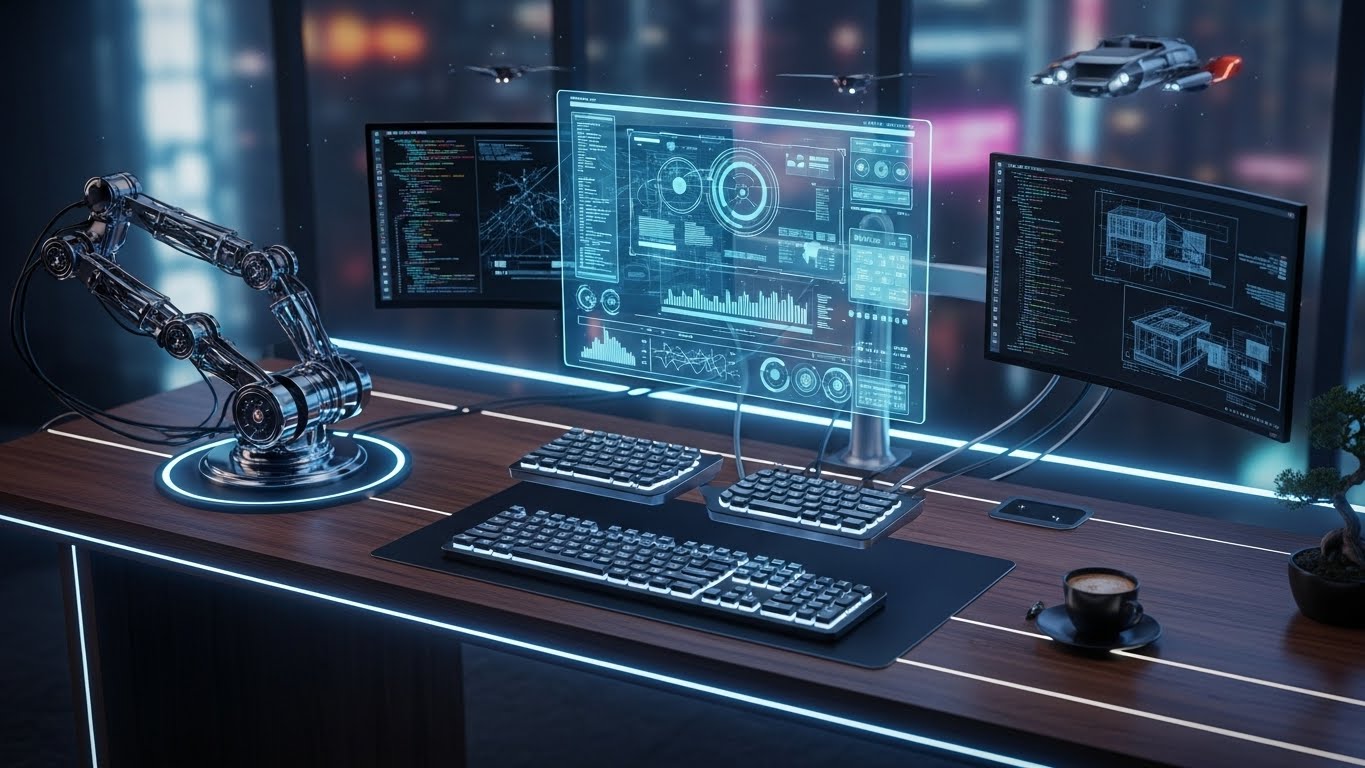
We live in an era where technological change no longer arrives with loud announcements or bulky gadgets. Instead, innovation is becoming microscopic, embedding itself into everyday life so subtly that most people don’t even notice it. This quiet transformation is giving rise to what many experts call invisible technology. These solutions blend seamlessly with human habits, environments, and intuitions. From quantum processors the size of a fingernail to AI systems that anticipate our needs before we express them, invisible tech is redefining how we perceive progress.
This blog dives deep into the newest wave of breakthrough technologies and examines how they’re shaping industries, human behavior, and the future of global connectivity.
The Shift Toward Seamless Automation
One of the most significant trends today is the rapid movement toward seamless automation. Unlike traditional automation, which requires programmed instructions and visible hardware, modern systems operate in the background. Smart sensors adapt lighting to your mood, predictive algorithms manage your schedule automatically, and AI-driven platforms handle repetitive tasks more efficiently than ever before.
This shift is largely possible due to advancements in microprocessing and low-power AI chips. These processors allow devices to understand context in real time, meaning machines can adjust their behavior based on the environment. This evolution is not simply about convenience. It signals a major step toward software and hardware capable of independent learning, self-optimization, and long-term adaptability.
Quantum Computing: The Power Within the Smallest Spaces
Quantum computing was once treated as an unreachable scientific fantasy. Today, it is inching closer to becoming mainstream. Unlike traditional computers that rely on bits, quantum processors use qubits, which can exist in multiple states at once. This allows them to solve certain types of problems exponentially faster.
What makes this development especially fascinating is the trend toward miniaturization. Early quantum machines were massive, room-sized systems requiring heavy cooling infrastructure. Now, experimental models are being refined to the point where they may eventually become compact enough for commercial labs, universities, and even advanced personal research hubs.
Quantum computing could transform numerous industries. In medicine, it can simulate molecules with extraordinary accuracy, opening the door to custom-designed drugs. In cybersecurity, it may both threaten and protect encryption technologies. In logistics, quantum processors could optimize global supply chains in seconds. The power emerging from these microscopic threads of technology may soon become one of humanity’s greatest tools.
The Rise of Bio-Integrated Devices
Another major advancement is the integration of technology into biological systems. Bio-integrated devices are not merely wearables. They merge with the body so naturally that they feel like extensions of our biological functions. These devices may track health markers, regulate bodily states, or enhance sensory perception.
Instead of relying on traditional electronics, some researchers are exploring materials that mimic human tissue, allowing sensors to stretch, bend, and adapt to biological rhythms. This opens the possibility of medical devices that continuously monitor glucose levels, detect early signs of disease, or deliver precise medicinal dosages immediately when needed.
The future may even include brain–computer interfaces capable of translating neural signals into digital actions. While still in early stages, these technologies are taking meaningful steps toward curing paralysis, restoring memory functions, and helping individuals with neurological conditions regain independence.
AI as an Intuitive Companion
Artificial intelligence has evolved beyond performing tasks. It is gradually becoming an intuitive companion that understands human emotions, context, and goals. Through multimodal learning, AI can now process images, audio, text, and even environmental signals simultaneously. This gives it an unprecedented ability to infer human needs.
For example, future AI assistants may adjust your home environment based on your stress level, help you plan tasks before you forget them, or provide recommendations that match both your personality and your long-term aspirations. Unlike the early days of AI, which relied on rigid codes and limited pattern recognition, modern systems learn continuously from interactions, creating personalized relationships with users.
This evolution raises profound questions about privacy, autonomy, and the nature of companionship. As AI becomes more emotionally intelligent, society must define new ethical frameworks that balance innovation with human dignity.
Smart Infrastructure and the Hyperconnected World
Cities are becoming smarter at a remarkable pace. Infrastructure now incorporates sensors, adaptive algorithms, and real-time analytical systems that manage traffic, energy, healthcare, and emergency responses. These smart-city systems optimize resources, reduce waste, and create safer environments.
Imagine a world where streetlights react to pedestrian movement, water systems detect leaks instantly, autonomous shuttles replace public buses during low-traffic hours, and energy grids redirect power dynamically based on consumption patterns. This is not science fiction; it is steadily unfolding across global urban landscapes.
Hyperconnectivity is also reshaping rural development. Remote areas that once lacked stable communication are now gaining access to cutting-edge wireless networks and solar-powered microgrids. These advancements support education, remote work, telemedicine, and entrepreneurship, bridging gaps that once seemed insurmountable.
The Future of Work: Symbiosis Between Humans and Machines
Technology is not replacing jobs; it is reshaping them. The future of work will be defined by symbiosis between humans and machines. Routine tasks will become automated, while creative problem-solving, emotional intelligence, and strategic thinking will grow more important.
Collaborative robots, often referred to as cobots, are already working side-by-side with humans in manufacturing environments. They handle repetitive tasks, while skilled workers focus on operations requiring adaptability and judgment. Similarly, AI-powered tools assist professionals in data analysis, research synthesis, and decision-making.
This shift may usher in a new wave of career opportunities in tech-enabled sectors, but it will also require continuous learning. Digital literacy, adaptability, and interdisciplinary knowledge will become essential skills for future workers.
Ethical Tech: Building a Responsible Future
With great technological power comes significant ethical responsibility. As systems gain autonomy, issues surrounding privacy, bias, and accountability become increasingly urgent. Developers and policy-makers must collaborate to create frameworks that ensure transparent, safe, and fair use of advanced technologies.
One of the biggest challenges is ensuring that AI and data systems operate without discriminatory outcomes. Ethical auditing tools, open governance structures, and long-term impact assessments will be key elements in designing trustworthy technologies.
The goal is not only to innovate but to innovate responsibly. The future of tech must be built on principles that protect human rights, encourage inclusivity, and preserve global stability.
Conclusion: The Microscopic Future with Massive Potential
The technological landscape is evolving in ways that are both subtle and profoundly impactful. Invisible systems, quantum processors, bio-integrated devices, intuitive AI, and smart infrastructure are quietly rewriting the rules of global progress. What once seemed futuristic is now merging seamlessly with everyday life.
The exciting part is that we are only scratching the surface. The innovations emerging today represent the foundation for an entirely new technological era—one in which machines are not external tools, but integrated partners that enhance human capabilities and enrich human experience.
As we step into this microscopic future with massive potential, one thing is certain: the future of technology will not just change how we live. It will change what it means to live in a world where the boundaries between human intuition and machine intelligence fade into something beautifully harmonious.