
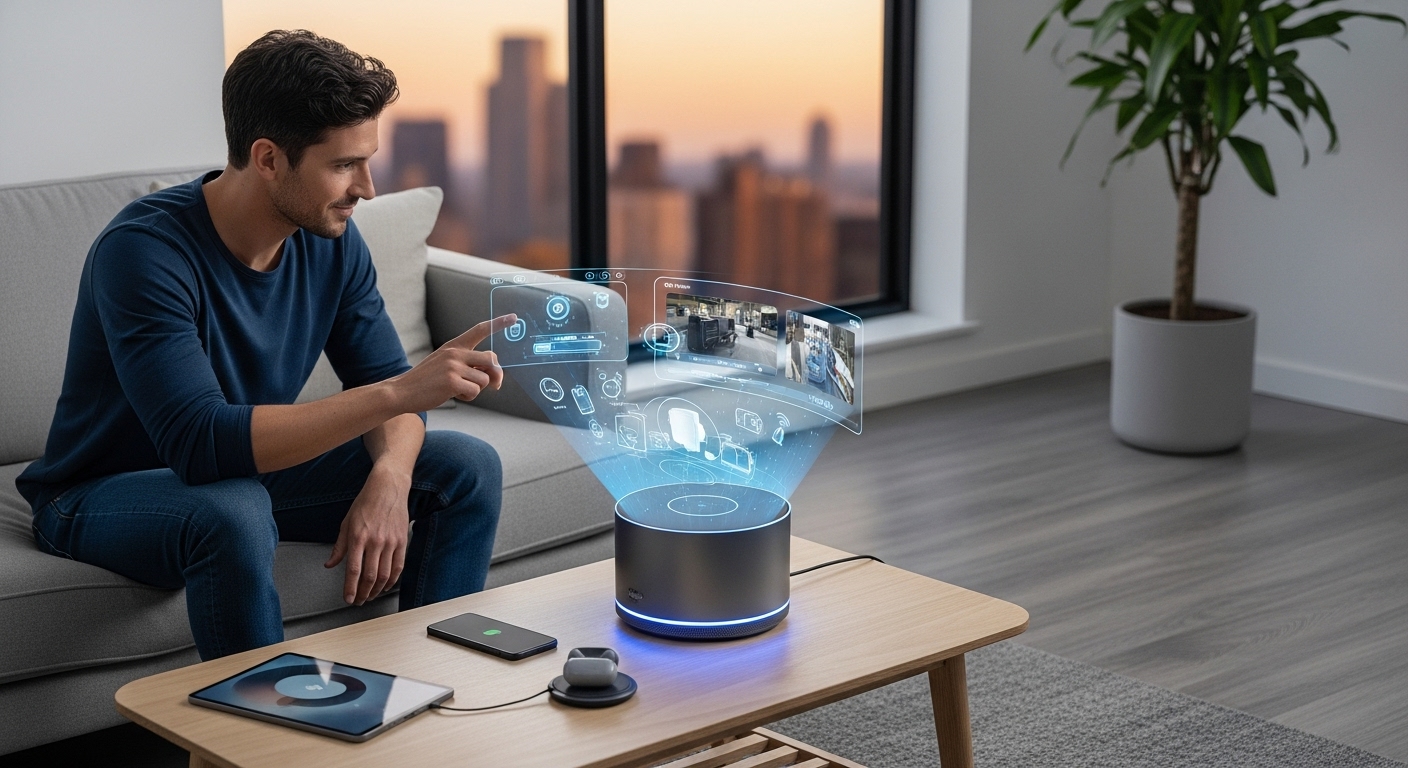
Introduction: A New Era of Innovation
As we stand on the brink of a technological revolution, it’s hard not to marvel at the pace of progress. What was once science fiction is now rapidly becoming a part of our daily lives. Innovations in artificial intelligence, quantum computing, 5G, and more are transforming industries and changing how we live, work, and communicate. The future is being shaped by technologies that were once unimaginable, and we are only beginning to scratch the surface of their potential. In this blog post, we will explore some of the most exciting technologies that are set to redefine the world in the years to come.
Artificial Intelligence: The Smart Revolution
Artificial intelligence (AI) has already become an essential part of many industries, from healthcare to entertainment. The technology is designed to simulate human intelligence, allowing machines to perform tasks that would typically require human intervention. Whether it’s virtual assistants like Siri and Alexa or advanced algorithms predicting consumer behavior, AI is everywhere.
But we’re only at the beginning of AI’s true potential. In healthcare, AI is being used to analyze medical data and assist in diagnostics, potentially identifying health conditions much earlier than traditional methods. In finance, AI-driven algorithms help make real-time investment decisions and detect fraud with remarkable accuracy. Over time, as AI continues to evolve, it will become an even more integral part of how we interact with the world. The key challenge ahead will be to ensure ethical and responsible use of AI, especially when it comes to privacy, data security, and job displacement.
Quantum Computing: The Future of Problem-Solving
Quantum computing represents a paradigm shift in how we process and analyze information. Unlike classical computers, which process data in binary code (0s and 1s), quantum computers use quantum bits, or qubits, which can exist in multiple states simultaneously. This allows quantum computers to solve certain problems exponentially faster than traditional computers.
Although quantum computing is still in its infancy, it holds immense potential for fields like cryptography, materials science, and artificial intelligence. In cryptography, for instance, quantum computers could potentially break current encryption methods, prompting the need for new, quantum-resistant algorithms. In the pharmaceutical industry, quantum computing could revolutionize drug discovery by simulating molecular interactions with unmatched speed and precision.
Despite the promising applications, quantum computing is facing significant hurdles, such as error rates and the need for extremely cold environments to maintain qubit stability. Still, the progress made so far is a clear indication that quantum computers will play a pivotal role in the future of technology.
5G Technology: Accelerating Connectivity
The arrival of 5G technology marks a major leap forward in wireless connectivity. With speeds up to 100 times faster than 4G, 5G will enable seamless communication, faster data transfer, and a more connected world. The improved speed and low latency will unlock new possibilities for technologies like augmented reality (AR), virtual reality (VR), and the Internet of Things (IoT).
One of the most significant impacts of 5G will be on autonomous vehicles. With near-instantaneous communication between vehicles, traffic infrastructure, and pedestrians, 5G will make self-driving cars safer and more reliable. In healthcare, 5G will enable real-time remote monitoring of patients and provide doctors with the ability to perform surgeries remotely using robotic systems. As 5G networks expand, the possibilities for innovation will be limitless.
However, the transition to 5G is not without challenges. The infrastructure needed to support 5G requires significant investment, and there are ongoing concerns about its potential impact on privacy and security. Nevertheless, 5G is poised to redefine how we connect with each other and the world around us.
Blockchain Technology: Decentralizing Trust
Blockchain is perhaps best known as the underlying technology behind cryptocurrencies like Bitcoin, but its potential extends far beyond digital currencies. At its core, blockchain is a decentralized ledger system that allows data to be securely recorded and verified without the need for a central authority. This makes it ideal for applications that require transparency, security, and accountability.
In industries like supply chain management, blockchain is being used to track the movement of goods in real-time, ensuring transparency and reducing fraud. In healthcare, blockchain is enabling secure sharing of medical records, allowing patients to control their data while ensuring privacy and security. The use of blockchain for voting systems also holds promise, providing a secure and transparent way to conduct elections.
Despite its potential, blockchain faces challenges related to scalability and regulatory acceptance. However, as the technology matures, it is likely that blockchain will become an integral part of many industries, streamlining operations and enhancing trust.
Augmented and Virtual Reality: Transforming Experience
Augmented reality (AR) and virtual reality (VR) are two technologies that are revolutionizing the way we experience the world. While VR creates immersive, computer-generated environments that transport users to new worlds, AR overlays digital information onto the physical world, enhancing the real world with interactive features.
In the gaming industry, VR is providing players with fully immersive experiences that blur the line between the virtual and real world. In education, AR is being used to bring textbook content to life, allowing students to interact with 3D models of historical artifacts or biological organisms. In healthcare, VR is used for therapeutic purposes, helping patients manage pain or reduce anxiety.
The potential applications for AR and VR extend far beyond entertainment and education. As the technology improves and becomes more accessible, AR and VR will reshape industries ranging from retail to real estate, allowing for more interactive, engaging, and personalized experiences.
The Internet of Things (IoT): A More Connected World
The Internet of Things (IoT) refers to the network of physical devices that are connected to the internet, allowing them to collect, exchange, and act on data. From smart thermostats and wearable fitness trackers to connected home appliances and self-driving cars, IoT is transforming the way we live.
In homes, IoT devices enable automation, such as adjusting lighting, controlling security systems, or monitoring energy use from a smartphone. In healthcare, IoT devices allow for real-time monitoring of patients’ vital signs, alerting medical professionals to potential issues before they become critical. In cities, IoT can improve traffic management, reduce waste, and increase energy efficiency, leading to smarter, more sustainable urban environments.
As IoT continues to expand, the challenge will be ensuring the security and privacy of the vast amounts of data generated by these devices. With the right safeguards in place, however, IoT has the potential to create a more interconnected, efficient, and convenient world.
Conclusion: Embracing the Future of Tech
As we venture further into the digital age, the potential for technology to transform our lives is boundless. From AI and quantum computing to 5G and blockchain, the innovations on the horizon promise to reshape industries and improve our quality of life in ways we never thought possible. However, with these advancements come challenges that must be addressed, including ethical concerns, data privacy, and cybersecurity risks.
The future of technology is incredibly exciting, but it is also one that requires careful thought and responsible innovation. By embracing these technologies while considering their broader implications, we can ensure that the tech of tomorrow will create a more sustainable, equitable, and connected world for all.